What is USB and USB Flash Drive? Complete Guide to Universal Serial Bus Technology. Part 1
Introduction to USB Technology
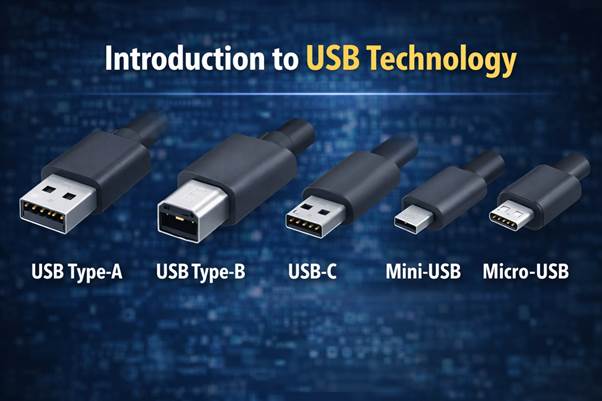
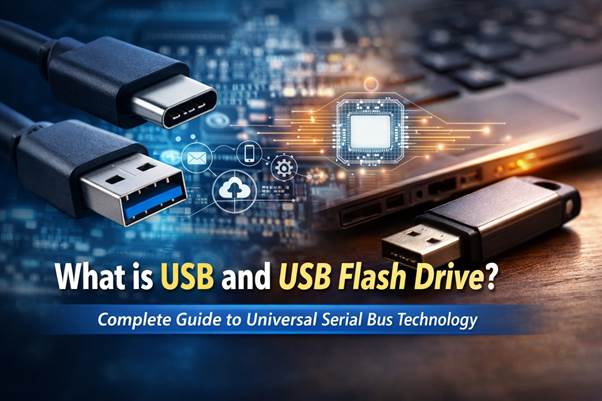
USB (Universal Serial Bus) is one of the most important technologies in modern computing, enabling seamless communication between devices and computers. First introduced in 1996, USB replaced a wide range of older connection standards and simplified how hardware interacts with systems. Before USB, users relied on complex setups involving multiple ports, drivers, and manual configurations, especially when connecting devices like a keyboard, mouse, or printers. The introduction of USB made it possible to connect devices instantly without rebooting, revolutionizing the user interface experience. Companies such as Microsoft, IBM, and Intel played key roles in developing and promoting this standard. Today, USB is used across nearly all platforms including Windows, Linux, and MacOS. Its versatility extends beyond simple data transfer to powering devices and supporting advanced technologies like Artificial Intelligence hardware accelerators.
What Does USB Stand For (Universal Serial Bus)
USB stands for Universal Serial Bus, a standardized interface designed to connect computers with peripheral devices. The term “universal” reflects its broad compatibility across different hardware manufacturers and operating systems such as Windows, Linux, and MacOS. Introduced in 1996 by a consortium including Intel and Microsoft, USB aimed to unify previously fragmented connection systems. The “serial” aspect refers to how data is transmitted one bit at a time, improving efficiency compared to older parallel systems. USB supports both data transfer and power delivery, making it highly versatile. It enables users to easily transfer files, including PDF documents or even large files, without needing complex configurations. Over time, USB has evolved into a core component of modern programming environments and hardware ecosystems. Its plug-and-play nature eliminates the need for manual driver installation in most cases.
Why USB Became the Standard Connection Interface
USB became the global standard because it simplified device connectivity in a way no previous technology could. Before USB, connecting devices required different ports and often manual setup processes, which complicated system administration tasks. USB introduced plug-and-play functionality, allowing devices to be recognized instantly by operating systems like Windows and Linux. This drastically improved productivity for both everyday users and developers working in Python or web development. Another key advantage was its ability to support multiple devices through hubs, reducing the need for multiple ports. Major companies such as HP, Sony, and Samsung adopted USB early, accelerating its global acceptance. USB also improved data transfer reliability, reducing errors compared to older standards. Its ability to deliver power alongside data further increased its importance. Over time, USB became essential for everything from charging smartphones to transferring data securely.
Brief History of USB Development
The development of USB began in the mid-1990s as a collaborative effort to simplify computer connectivity. In 1996, USB 1.0 was introduced, but it was not widely adopted until USB 1.1 improved compatibility. Companies like IBM, Intel, and Microsoft were instrumental in pushing the technology forward. Early adoption was slow because many devices still relied on legacy ports. However, the release of Windows 98 significantly boosted USB usage by providing native support. By the early 2000s, USB had replaced older storage methods like floppy disks, marking a major shift in data storage. The introduction of USB flash drives allowed users to easily carry and transfer data without bulky hardware. Over time, USB evolved to support faster speeds and more complex devices. Today, it is a foundational technology in both consumer and enterprise environments.
Evolution from Serial and Parallel Ports to USB
Before USB, computers relied on serial and parallel ports to connect external devices. Serial ports transmitted data bit by bit, while parallel ports sent multiple bits simultaneously, but both had limitations. These older interfaces were slow, bulky, and difficult to configure, especially when dealing with multiple devices. Users often faced compatibility issues and needed technical knowledge to manage connections. USB simplified this by providing a single standardized interface. It eliminated the need for multiple connectors and reduced hardware complexity. This transition significantly improved usability and reduced setup time. It also enhanced the overall GUI experience by enabling faster interaction between devices and systems. As USB adoption grew, manufacturers gradually phased out legacy ports. This shift marked a major milestone in the evolution of computer hardware.
Importance of USB in Modern Computing
USB plays a critical role in modern computing by enabling seamless connectivity between devices. It supports a wide range of applications, from data transfer to powering devices. USB is essential for tasks such as transferring a screenshot, backing up data, or installing operating systems. It is also widely used in enterprise environments for system administration and troubleshooting. USB drives are commonly used to upload files or transport sensitive data securely. However, they can also pose risks if infected with a virus or trojan, making antivirus protection important. Modern USB standards support high-speed data transfer, enabling efficient handling of large datasets. USB is also integrated into emerging technologies, including Artificial Intelligence systems. Its versatility ensures it remains a cornerstone of digital infrastructure.
History and Evolution of USB
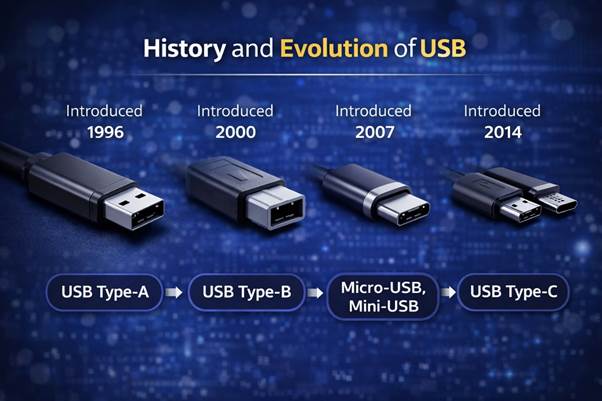
The evolution of USB technology reflects the rapid advancement of computing needs over the past decades. Starting from modest beginnings in 1996, USB has continuously improved in speed, efficiency, and functionality. Each new version introduced significant enhancements, allowing users to transfer increasingly large files and power more demanding devices. Early versions focused on replacing outdated interfaces, while modern versions aim to support high-performance computing and advanced applications. Companies like Intel, Microsoft, and HP have played crucial roles in its development. The transition from USB 1.0 to USB4 demonstrates how technology adapts to user demands. Today, USB is not only a data transfer tool but also a power delivery system. Its evolution mirrors the growth of digital ecosystems worldwide.