Types of Drag-and-Drop Interactions
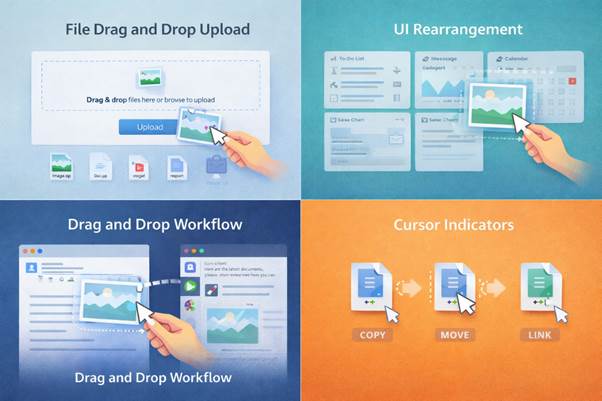
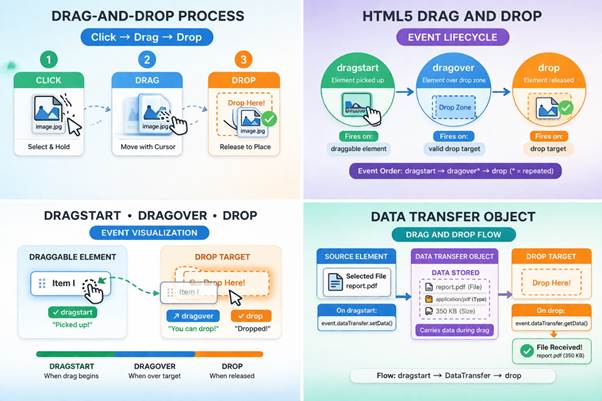
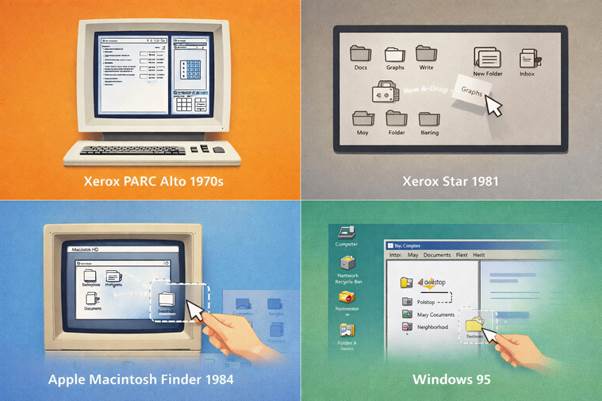
Drag-and-drop interactions can be categorized into multiple types depending on their purpose and behavior within a system. These variations began evolving after graphical interfaces became mainstream in the 1990s, particularly in operating systems developed in USA and Europe. Each type represents a different way users interact with digital objects, from simple file movement to complex cross-application workflows. The diversity of these interactions reflects the flexibility of drag-and-drop as a design pattern. Over time, developers have expanded its functionality to support advanced use cases such as real-time collaboration and cloud synchronization. Modern systems rely on clearly defined interaction types to ensure consistency and usability. Understanding these categories helps developers design more intuitive interfaces. It also allows users to predict outcomes more accurately. Each type contributes to making digital environments more interactive and efficient.
File Drag-and-Drop
File drag-and-drop is the most traditional and widely recognized form of this interaction. It allows users to move files between folders, drives, or applications without using menus. This feature became dominant after 1995 with the widespread adoption of graphical operating systems. Users can drag documents, images, or videos directly into applications or storage systems. In professional environments, this interaction is essential for managing large datasets efficiently. It also supports batch operations, where multiple files can be moved at once. File drag-and-drop reduces the need for navigation through complex directory structures. This method is commonly used in cloud storage